
2026-04-13
来自:安徽中鸿盛鑫
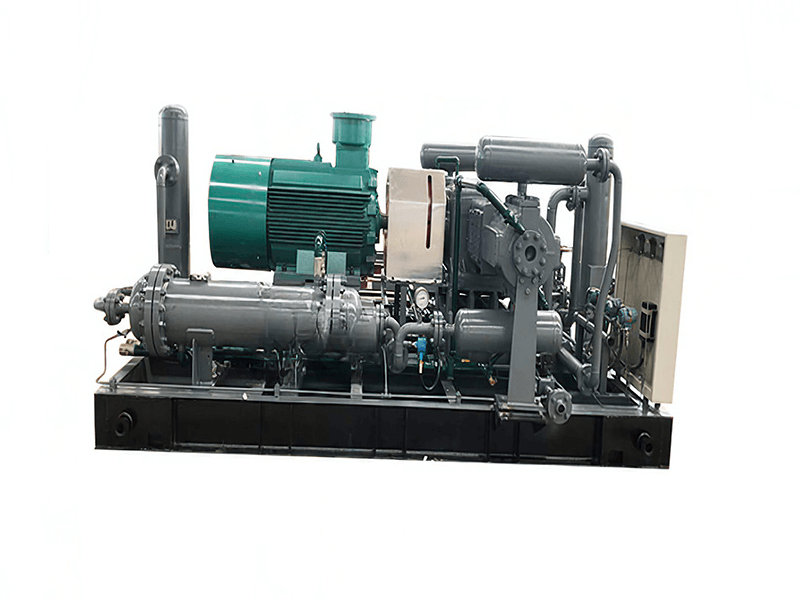
In the selection of hydrogen equipment, the perception that "oil-free compressors are expensive" is common across the industry. However, this judgment is often based solely on initial procurement cost, overlooking the more complex cost structure over the equipment's full lifecycle. From a Total Cost of Ownership (TCO) perspective, oil-free compressors demonstrate significant economic advantages.
Explicit Costs: Balancing Initial Investment and Energy Consumption
Oil-free compressors, particularly diaphragm-type models, do have a higher initial procurement cost than oil-lubricated compressors of comparable specifications. This price difference stems from more complex structural designs, the use of high-grade materials, and micron-level machining accuracy requirements. Nevertheless, the gap in initial investment is progressively narrowed over long-term operation by differences in energy consumption.
Oil-free compressors eliminate the mechanical losses associated with oil churning, typically achieving operating efficiencies 5% to 8% higher than their oil-lubricated counterparts. For continuously operating hydrogen refueling stations or hydrogen production plants, this efficiency advantage translates into substantial electricity cost savings. Taking a compressor running 8,000 hours per year as an example, the annual electricity cost savings from efficiency gains can range from tens of thousands to hundreds of thousands of RMB, depending on power scale and local electricity rates. Over a design life of 10 years or more, the cumulative difference in energy consumption is often sufficient to cover or even exceed the initial investment gap.

Implicit Costs: Overlooked Post-Treatment and Maintenance Expenses
The implicit costs of oil-lubricated compressors tend to emerge gradually after commissioning. To ensure hydrogen purity meets the requirements of fuel cells or the electronics industry, oil-lubricated systems must be equipped with complex oil removal filtration devices, including activated carbon filters, coalescing filters, and other multi-stage purification equipment. These filter elements are consumables with high replacement frequency, and the spent filters, contaminated with oil, must be disposed of as hazardous waste, incurring significant treatment costs. Oil-free compressors entirely eliminate this entire post-treatment stage, avoiding both consumable procurement expenses and the environmental burden and cost of hazardous waste disposal.
Differences in maintenance costs are equally notable. Oil-lubricated compressors require regular oil changes and oil circuit cleaning, with oil change intervals typically ranging from several months to one year. Downtime for these procedures directly impacts operational continuity. Oil-free compressors eliminate the need for such maintenance tasks, not only saving the cost of lubricant procurement but, more importantly, reducing production losses due to downtime.
Value of By-Products: Direct Application Advantages of Pure Hydrogen
For high-purity hydrogen applications, the value of oil-free compressors extends beyond cost savings. Even after oil removal treatment, hydrogen produced by oil-lubricated compressors carries a risk of residual trace oil contamination, which can cause irreversible damage to hydrogen fuel cell catalysts. To ensure safety, users often need to install online monitoring equipment or adopt redundant purification measures, further driving up operating costs.
Hydrogen produced by oil-free compressors requires no secondary purification before being directly fed into fuel cells, a characteristic that holds irreplaceable value in high-purity hydrogen applications. For hydrogen refueling stations, this means operational continuity assurance; for the electronics industry and other applications with stringent hydrogen purity requirements, oil-free design is a non-negotiable technical threshold rather than an option.
Conclusion
In hydrogen equipment selection, focusing on "Total Cost of Ownership" rather than "procurement price" is the foundation of sound decision-making. Although oil-free compressors are at a disadvantage in the initial investment phase, they demonstrate stronger economic viability from a lifecycle perspective due to higher operating efficiency, lower post-treatment and maintenance costs, and unique advantages in high-purity hydrogen applications. Properly calculating this "hydrogen account" helps users look beyond short-term cost constraints and make investment decisions with greater long-term value.
让我们谈谈!我们将为您提供完美的解决方案
我们是一家专业的设备制造商,提供清洁能源设备撬装及工程服务系统解决方案。